


01 Jan, 0001
What Happens in IVF?
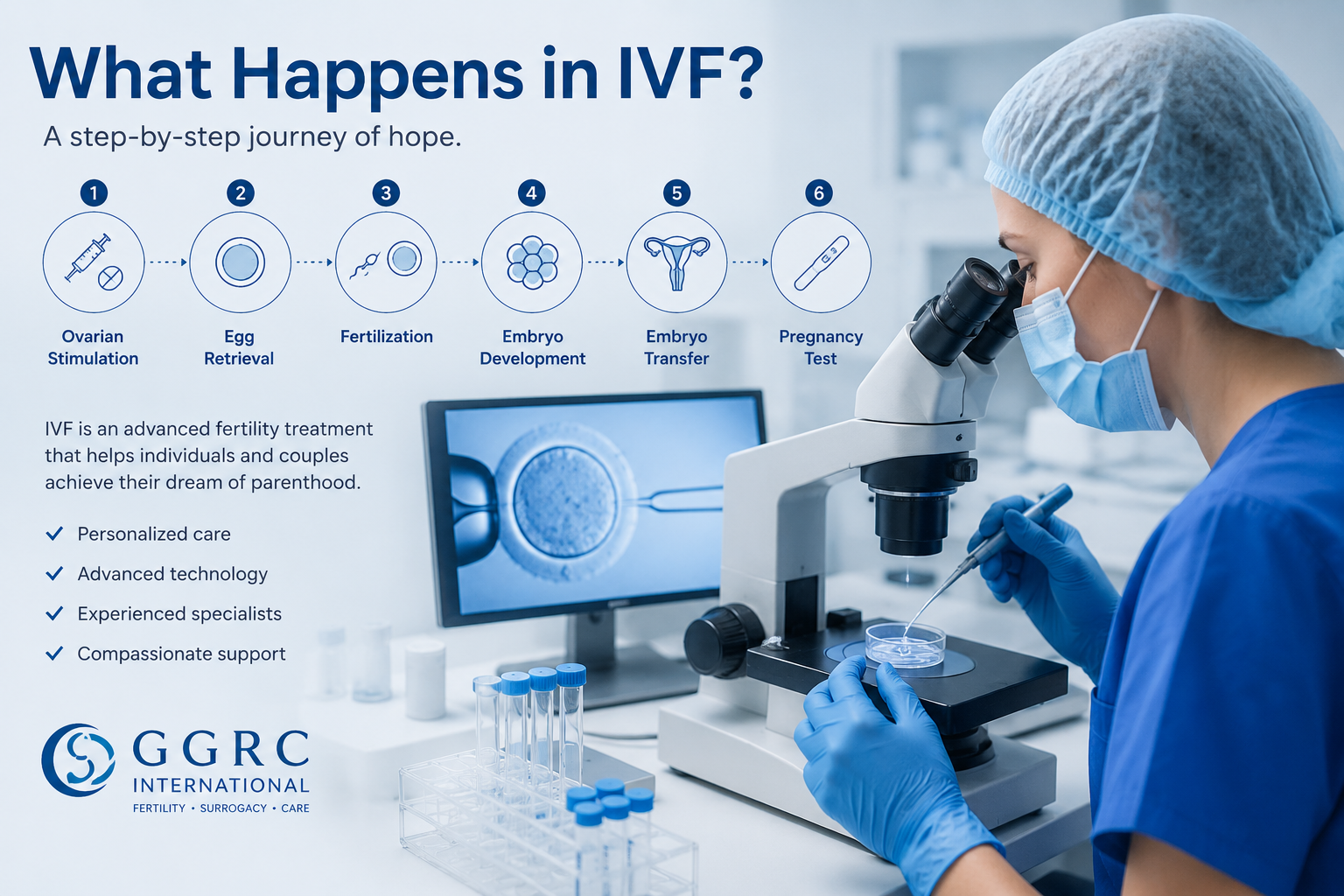
In Vitro Fertilization (IVF) is one of the most advanced and successful fertility treatments available today. It helps individuals and couples who are experiencing infertility achieve pregnancy through carefully monitored medical and laboratory procedures.
At GGRC International, we understand that starting IVF can feel overwhelming at first. Knowing what happens during the IVF process can help you feel more confident, informed, and prepared for your fertility journey.
This guide explains the IVF process step by step, including how eggs are collected, how embryos are created, and what to expect during treatment.
What Is IVF?
IVF (In Vitro Fertilization) is a fertility treatment where eggs are fertilized with sperm in a specialized laboratory. After fertilization, the healthiest embryo is transferred into the uterus to achieve pregnancy.
IVF may be recommended for:
-
Blocked or damaged fallopian tubes
-
Male infertility factors
-
Ovulation disorders
-
Endometriosis
-
Unexplained infertility
-
Genetic testing needs
-
Same-sex couples or single parents
-
Previous unsuccessful fertility treatments
Step 1: Initial Fertility Consultation
The IVF journey usually begins with a consultation and fertility evaluation.
During this stage, fertility specialists review:
-
Medical history
-
Hormonal health
-
Ultrasound examinations
-
Sperm analysis
-
Previous fertility treatments
-
Lifestyle and reproductive factors
The goal is to create a personalized IVF treatment plan based on each patient’s specific needs.
Step 2: Ovarian Stimulation
In a natural cycle, the body typically produces one egg per month. During IVF, fertility medications are used to stimulate the ovaries to produce multiple mature eggs.
Patients receive hormone injections for approximately 8–14 days while doctors monitor progress through:
-
Ultrasounds
-
Blood tests
-
Hormone level checks
Careful monitoring helps determine the best timing for egg retrieval.
Step 3: Egg Retrieval Procedure
Once the eggs are mature, doctors perform a minor procedure called egg retrieval.
The procedure:
-
Usually takes 20–30 minutes
-
Is performed under light sedation
-
Uses ultrasound guidance
-
Collects eggs directly from the ovaries
Most patients recover quickly and return home the same day.
Step 4: Fertilization in the Laboratory
After egg retrieval, the collected eggs are combined with sperm in a fertility laboratory.
There are two main fertilization methods:
Conventional IVF
Healthy sperm are placed around the eggs to allow natural fertilization.
ICSI (Intracytoplasmic Sperm Injection)
A single sperm is injected directly into the egg. This method is commonly used for male infertility cases.
The laboratory team carefully monitors embryo development over several days.
Step 5: Embryo Development
Fertilized eggs become embryos and continue growing inside specialized incubators.
Embryologists monitor:
-
Cell division
-
Embryo quality
-
Growth patterns
-
Developmental progress
The healthiest embryos are selected for transfer.
In some cases, embryos may also undergo genetic testing (PGT) before transfer.
Step 6: Embryo Transfer
The embryo transfer is one of the most important stages of IVF.
During this procedure:
-
A selected embryo is placed into the uterus
-
The procedure is quick and usually painless
-
No anesthesia is typically required
-
Patients can often resume normal activities shortly after
The goal is for the embryo to implant successfully into the uterine lining.
Step 7: Pregnancy Test
Approximately 10–14 days after embryo transfer, a blood pregnancy test is performed.
This test measures hCG hormone levels to determine whether implantation and pregnancy have occurred.
Waiting for results can be emotionally challenging, which is why emotional support and communication during IVF are very important.
How Long Does IVF Take?
A full IVF cycle typically takes around 4–6 weeks from ovarian stimulation to pregnancy testing.
However, timelines may vary depending on:
-
Individual health conditions
-
Medication response
-
Additional testing
-
Frozen embryo transfers
-
Personalized treatment protocols
What Are the Success Rates of IVF?
IVF success rates depend on several factors, including:
-
Age
-
Egg quality
-
Sperm quality
-
Overall reproductive health
-
Embryo quality
-
Clinic experience
Modern fertility technologies and personalized treatment plans significantly improve IVF outcomes.
Emotional Support During IVF
IVF can be both physically and emotionally demanding. Many patients experience stress, anxiety, excitement, and uncertainty during treatment.
At GGRC International, we believe compassionate care is just as important as medical expertise. Supporting patients emotionally throughout the process helps create a more positive fertility journey.
Why Choose GGRC International?
GGRC International provides advanced fertility care with experienced specialists, modern reproductive technologies, and personalized treatment plans.
We are committed to helping intended parents feel informed, supported, and confident throughout every stage of IVF treatment.
Final Thoughts
Understanding what happens in IVF can help reduce fear and uncertainty about fertility treatment. From ovarian stimulation and egg retrieval to embryo transfer and pregnancy testing, each stage of IVF is carefully designed to maximize the chances of a successful pregnancy.
If you are considering IVF treatment, GGRC International is here to guide and support you throughout your parenthood journey.
Suggested Main Image Concept
A modern fertility clinic scene showing a caring doctor consulting with a hopeful couple in a bright IVF clinic environment, combined with subtle laboratory and embryo imagery in the background. Clean white and blue medical aesthetic, professional lighting, warm emotional atmosphere, realistic style, high-end healthcare branding.
SEO Title
What Happens in IVF? Step-by-Step IVF Process Explained | GGRC International
Meta Description
Learn what happens during IVF treatment step by step, from fertility testing and egg retrieval to embryo transfer and pregnancy testing. Understand the IVF journey with GGRC International.
What Happens in IVF?
In Vitro Fertilization (IVF) is one of the most advanced and successful fertility treatments available today. It helps individuals and couples who are experiencing infertility achieve pregnancy through carefully monitored medical and laboratory procedures.
At GGRC International, we understand that starting IVF can feel overwhelming at first. Knowing what happens during the IVF process can help you feel more confident, informed, and prepared for your fertility journey.
This guide explains the IVF process step by step, including how eggs are collected, how embryos are created, and what to expect during treatment.
What Is IVF?
IVF (In Vitro Fertilization) is a fertility treatment where eggs are fertilized with sperm in a specialized laboratory. After fertilization, the healthiest embryo is transferred into the uterus to achieve pregnancy.
IVF may be recommended for:
-
Blocked or damaged fallopian tubes
-
Male infertility factors
-
Ovulation disorders
-
Endometriosis
-
Unexplained infertility
-
Genetic testing needs
-
Same-sex couples or single parents
-
Previous unsuccessful fertility treatments
Step 1: Initial Fertility Consultation
The IVF journey usually begins with a consultation and fertility evaluation.
During this stage, fertility specialists review:
-
Medical history
-
Hormonal health
-
Ultrasound examinations
-
Sperm analysis
-
Previous fertility treatments
-
Lifestyle and reproductive factors
The goal is to create a personalized IVF treatment plan based on each patient’s specific needs.
Step 2: Ovarian Stimulation
In a natural cycle, the body typically produces one egg per month. During IVF, fertility medications are used to stimulate the ovaries to produce multiple mature eggs.
Patients receive hormone injections for approximately 8–14 days while doctors monitor progress through:
-
Ultrasounds
-
Blood tests
-
Hormone level checks
Careful monitoring helps determine the best timing for egg retrieval.
Step 3: Egg Retrieval Procedure
Once the eggs are mature, doctors perform a minor procedure called egg retrieval.
The procedure:
-
Usually takes 20–30 minutes
-
Is performed under light sedation
-
Uses ultrasound guidance
-
Collects eggs directly from the ovaries
Most patients recover quickly and return home the same day.
Step 4: Fertilization in the Laboratory
After egg retrieval, the collected eggs are combined with sperm in a fertility laboratory.
There are two main fertilization methods:
Conventional IVF
Healthy sperm are placed around the eggs to allow natural fertilization.
ICSI (Intracytoplasmic Sperm Injection)
A single sperm is injected directly into the egg. This method is commonly used for male infertility cases.
The laboratory team carefully monitors embryo development over several days.
Step 5: Embryo Development
Fertilized eggs become embryos and continue growing inside specialized incubators.
Embryologists monitor:
-
Cell division
-
Embryo quality
-
Growth patterns
-
Developmental progress
The healthiest embryos are selected for transfer.
In some cases, embryos may also undergo genetic testing (PGT) before transfer.
Step 6: Embryo Transfer
The embryo transfer is one of the most important stages of IVF.
During this procedure:
-
A selected embryo is placed into the uterus
-
The procedure is quick and usually painless
-
No anesthesia is typically required
-
Patients can often resume normal activities shortly after
The goal is for the embryo to implant successfully into the uterine lining.
Step 7: Pregnancy Test
Approximately 10–14 days after embryo transfer, a blood pregnancy test is performed.
This test measures hCG hormone levels to determine whether implantation and pregnancy have occurred.
Waiting for results can be emotionally challenging, which is why emotional support and communication during IVF are very important.
How Long Does IVF Take?
A full IVF cycle typically takes around 4–6 weeks from ovarian stimulation to pregnancy testing.
However, timelines may vary depending on:
-
Individual health conditions
-
Medication response
-
Additional testing
-
Frozen embryo transfers
-
Personalized treatment protocols
What Are the Success Rates of IVF?
IVF success rates depend on several factors, including:
-
Age
-
Egg quality
-
Sperm quality
-
Overall reproductive health
-
Embryo quality
-
Clinic experience
Modern fertility technologies and personalized treatment plans significantly improve IVF outcomes.
Emotional Support During IVF
IVF can be both physically and emotionally demanding. Many patients experience stress, anxiety, excitement, and uncertainty during treatment.
At GGRC International, we believe compassionate care is just as important as medical expertise. Supporting patients emotionally throughout the process helps create a more positive fertility journey.
Why Choose GGRC International?
GGRC International provides advanced fertility care with experienced specialists, modern reproductive technologies, and personalized treatment plans.
We are committed to helping intended parents feel informed, supported, and confident throughout every stage of IVF treatment.
Final Thoughts
Understanding what happens in IVF can help reduce fear and uncertainty about fertility treatment. From ovarian stimulation and egg retrieval to embryo transfer and pregnancy testing, each stage of IVF is carefully designed to maximize the chances of a successful pregnancy.
If you are considering IVF treatment, GGRC International is here to guide and support you throughout your parenthood journey.
Suggested Main Image Concept
A modern fertility clinic scene showing a caring doctor consulting with a hopeful couple in a bright IVF clinic environment, combined with subtle laboratory and embryo imagery in the background. Clean white and blue medical aesthetic, professional lighting, warm emotional atmosphere, realistic style, high-end healthcare branding.


