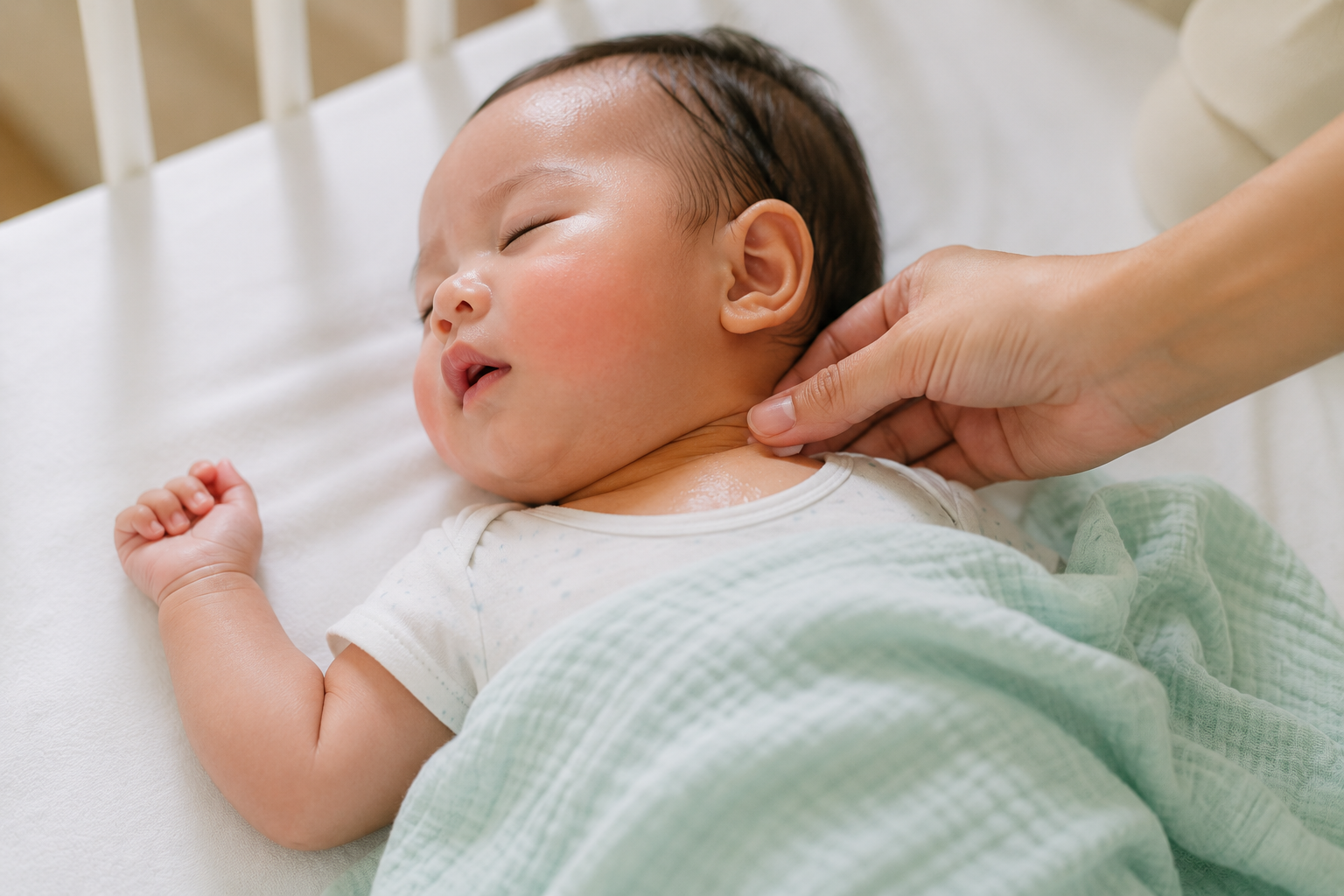
Is Your Baby Overheating? Signs Your Baby Is Too Hot
Babies can become overheated more easily than adults, especially during sleep, hot weather, or when overdressed. While mild overheating may simply cause discomfort or poor sleep, severe overheating can become dangerous and has even been linked to an increased risk of Sudden Infant Death Syndrome (SIDS).
Understanding the signs of overheating and knowing how to keep your baby at a safe temperature is an important part of infant care.
Why Babies Overheat Easily
Infants are not yet able to regulate their body temperature effectively. Compared to adults:
- Their body temperature rises faster
- They sweat less efficiently
- Their cooling systems are still developing
Because of this, babies are more vulnerable to:
- Heat rash
- Dehydration
- Sleep disturbances
- Heat-related illness
Overheating risk is especially important during the first year of life, particularly under 6 months of age.
Signs Your Baby May Be Too Hot
One of the easiest ways to check if your baby is overheating is by touching the back of their neck or ears.
Common signs of overheating include:
- Sweaty neck
- Hot or red ears
- Warm skin
- Flushed cheeks
- Rapid heartbeat
- Irritability or fussiness
- Heat rash
- Lethargy or unusual sleepiness
- Vomiting
- Fever-like symptoms
If your baby appears difficult to wake, unusually weak, or unresponsive, seek medical attention immediately.
Can Babies Overheat While Sleeping?
Yes. Babies can overheat during sleep, especially if:
- The room is too warm
- They are overdressed
- Heavy blankets are used
- Hats are worn indoors during sleep
Research has shown that overheating may increase the risk of SIDS.
Ideal Room Temperature for Babies
Experts generally recommend keeping your baby’s room between:
The room should feel comfortable for a lightly clothed adult.
Safe Sleep Tips to Prevent Overheating
Dress Baby in Light Layers
A good rule:
- Dress your baby in only one more layer than an adult would wear comfortably.
Avoid Hats During Sleep
Babies release excess heat through their heads. Hats can trap heat and increase overheating risk during sleep.
Use Breathable Fabrics
Choose lightweight, breathable materials such as:
- Cotton
- Muslin
- Lightweight sleep sacks
Avoid thick synthetic fabrics like heavy fleece.
Skip Loose Blankets
Loose blankets increase both overheating and suffocation risks. Instead, use properly fitted sleep sacks if needed.
Keep Cribs Clear
A safe sleep environment should contain:
- Firm mattress
- Fitted sheet only
- No pillows, toys, or blankets
Preventing Overheating in Summer
Hot weather can quickly raise a baby’s body temperature.
Summer safety tips:
- Stay indoors during peak heat hours
- Use air conditioning or fans safely
- Keep babies hydrated
- Dress them in lightweight clothing
- Avoid covering strollers with blankets
- Seek shade outdoors
Babies younger than 6 months should generally receive hydration through breastmilk or formula only unless advised otherwise by a pediatrician.
Preventing Overheating in Winter
Parents often accidentally overdress babies during colder months.
Winter safety tips:
- Use layers instead of thick bulky clothing
- Remove layers indoors
- Avoid heavy coats in car seats
- Monitor room temperatures carefully
How to Cool Down an Overheated Baby
If your baby feels too hot:
- Move them to a cooler room
- Remove extra clothing layers
- Offer breastmilk or formula
- Use a lukewarm sponge bath
- Apply cool compresses gently
- Keep airflow circulating
Avoid:
- Ice baths
- Very cold water
- Direct strong fan airflow
If symptoms do not improve, contact your pediatrician.
Heat Rash in Babies
Overheating can cause heat rash, also called prickly heat.
Heat rash commonly appears on:
- Neck
- Chest
- Back
- Armpits
- Diaper area
It often looks like:
- Tiny red bumps
- Pink irritated skin
- Small patches of irritation
Keeping your baby cool and dry usually helps the rash improve.
Overheating vs. Fever
Sometimes overheating can resemble fever symptoms. A rectal temperature of:
- 100.4°F (38°C) or higher in babies under 3 months requires immediate medical evaluation.
Always contact your healthcare provider if you are unsure whether your baby has a fever or heat-related symptoms.
Final Thoughts
Babies are highly sensitive to temperature changes and can overheat quickly, especially during sleep or hot weather. Monitoring room temperature, using breathable clothing, and watching for warning signs can help keep your baby safe and comfortable.
At GGRC International, we believe informed parenting and safe infant care are essential parts of a healthy family journey. Always consult your pediatrician if you have concerns about your baby’s temperature or overall health.