


18 Mar, 2026
White Patches in Your Baby’s Mouth? It Could Be Oral Thrush!
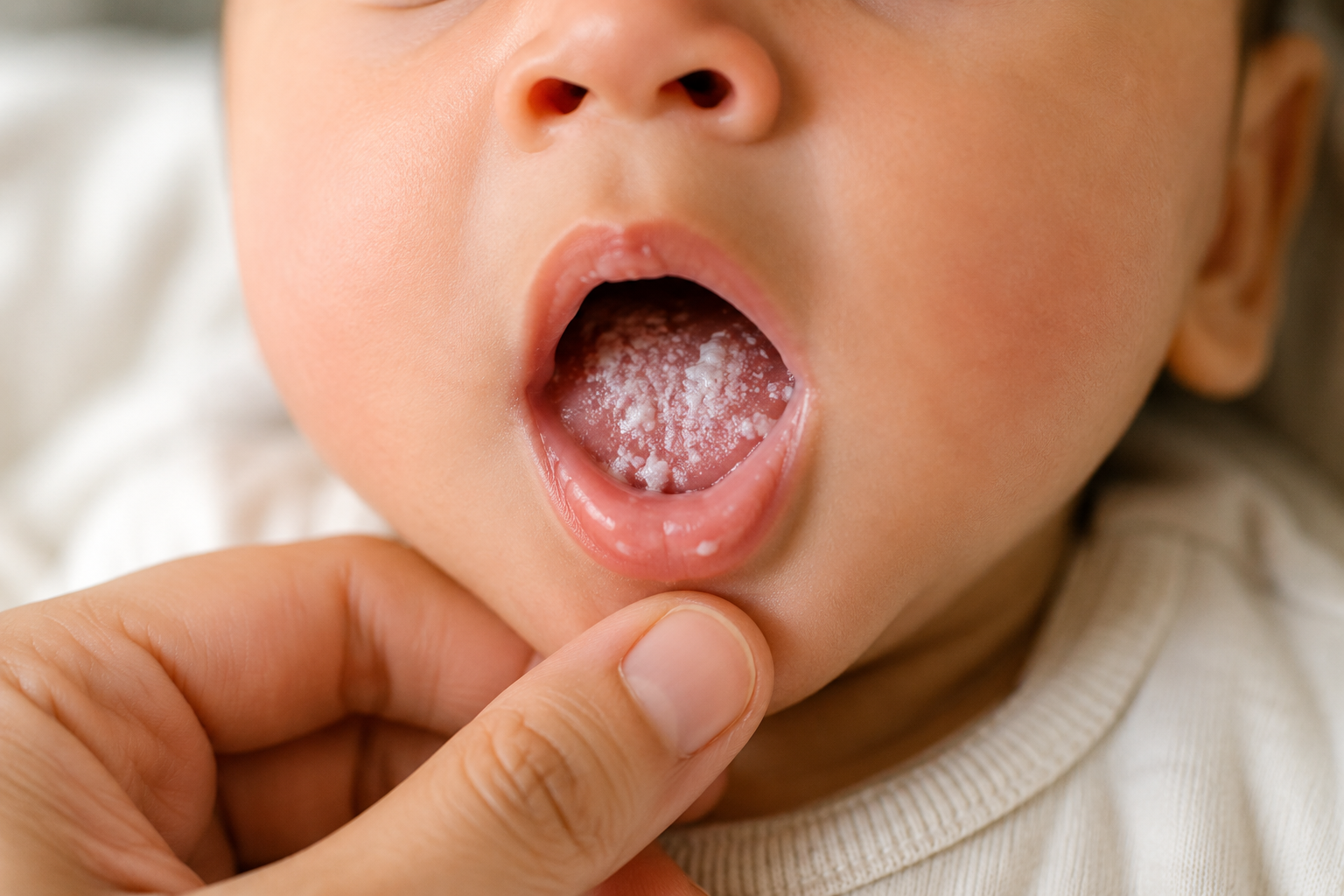
White Patches in Your Baby’s Mouth? It Could Be Oral Thrush!
Seeing white patches inside your baby’s mouth can be alarming for new parents. While it may look unusual or concerning, oral thrush is actually a very common and treatable condition in infants. Understanding the symptoms, causes, and treatment options can help parents feel more confident and prepared.
What Is Oral Thrush in Babies?
Oral thrush is a fungal infection caused by an overgrowth of Candida albicans, a type of yeast naturally found in the body. When this yeast grows excessively inside a baby’s mouth, it creates the creamy white patches associated with thrush.
Babies are especially vulnerable because their immune systems are still developing and may not yet effectively control yeast growth.
What Causes Oral Thrush in Infants?
Several factors can increase the risk of oral thrush in babies:
Immature Immune System
Newborns and young infants have developing immune systems, making them more susceptible to yeast overgrowth.
Exposure During Birth
If the mother has a vaginal yeast infection during delivery, the baby may be exposed to Candida while passing through the birth canal.
Antibiotic Use
Antibiotics can disrupt the balance of healthy bacteria that normally help control yeast growth, increasing the chance of thrush.
Breastfeeding Transmission
Thrush can pass between a breastfeeding parent and baby. Mothers may experience:
- Burning nipple pain
- Itching
- Cracked nipples
- Deep breast discomfort
Both mother and baby may require treatment to prevent reinfection.
Symptoms of Oral Thrush in Babies
The most recognizable symptom is white or cream-colored patches inside the mouth.
Common locations include:
- Tongue
- Inner cheeks
- Roof of the mouth
- Gums
- Back of the throat
Unlike milk residue, thrush patches usually do not wipe away easily. Attempting to remove them may leave red, irritated skin underneath.
Additional symptoms may include:
- Fussiness during feeding
- Difficulty breastfeeding or bottle-feeding
- Crying while eating
- Reduced appetite
- Mouth discomfort
Thrush and Diaper Rash
Candida can also cause diaper rash. A yeast-related diaper rash often appears:
- Bright red
- Inflamed
- With small red bumps around the edges
- Resistant to regular diaper creams
Is Oral Thrush Painful?
For some babies, oral thrush causes little discomfort. For others, feeding may become painful or irritating.
Signs your baby may be uncomfortable include:
- Pulling away during feeding
- Increased fussiness
- Crying while nursing
- Trouble latching
Breastfeeding parents may also experience pain due to yeast infection transfer.
How Is Oral Thrush Treated?
Doctors typically prescribe antifungal medications to treat infant thrush.
Common treatments include:
- Nystatin oral suspension
- Antifungal creams for breastfeeding mothers
- Oral antifungal medications in persistent cases
Treatment is usually applied directly to the affected areas inside the baby’s mouth.
Hygiene Tips During Treatment
To help prevent reinfection:
- Sterilize pacifiers and bottle nipples daily
- Clean breast pump parts thoroughly
- Wash hands before and after treatment
- Change breast pads frequently
- Wash bras and baby items in hot water
Most babies improve within several days after starting treatment.
Can Oral Thrush Go Away on Its Own?
Mild cases may occasionally resolve naturally, especially in older babies. However, treatment is usually recommended because thrush can worsen, spread, and interfere with feeding.
When Should You Call Your Pediatrician?
Contact your child’s healthcare provider if:
- White patches do not wipe away
- Your baby is younger than 2 months old
- Feeding becomes difficult
- Symptoms worsen
- Thrush keeps returning
- A diaper rash does not improve
- Breastfeeding becomes painful
A pediatrician can confirm the diagnosis and recommend the most appropriate treatment.
Final Thoughts
Oral thrush in babies is common, manageable, and usually resolves quickly with proper care. While white patches in your baby’s mouth may seem frightening at first, most cases are easily treated with antifungal medication and good hygiene practices.
At GGRC International, we believe parents deserve trusted medical guidance and compassionate support throughout every stage of parenthood and child development.


